If you want an easier Bay Area commute without giving up neighborhood feel, buying near El Cerrito BART can look like a smart move. It can be, but "near the station" means different things depending on the block, the property type, and your tolerance for noise, parking friction, and ongoing redevelopment. If you are weighing convenience against day-to-day livability, this guide will help you ask better questions and compare homes more clearly. Let’s dive in.
Why El Cerrito BART draws buyers
El Cerrito has two BART stations: El Cerrito Plaza and El Cerrito del Norte. For many buyers, that gives you more than one access point for commuting, errands, and car-light living. It also means the station areas are active places that continue to evolve.
Both stations currently offer BART parking with daily-fee and reserved options. Plaza shows $3.40 daily parking, $6 daily reserved, and $105 monthly reserved, while del Norte shows $3.40 daily parking, $5 daily reserved, and $93.80 monthly reserved. That can matter if you expect to drive to the station some days rather than walk every time.
Local parking rules also shape the experience near both stations. El Cerrito’s Residential Parking Program was created for residents near the stations, and new resident parking zones can be created within a half-mile radius of either station. If you are considering a home close to BART, it is worth understanding both property parking and nearby street parking conditions before you write an offer.
Near BART means different housing
One of the biggest buyer misconceptions is assuming all homes near BART will feel similar. In El Cerrito, they do not. The city’s housing stock in 2020 was mostly single-family detached homes at 68.1%, with smaller shares of attached homes and multifamily housing.
Around the station corridors and commercial areas, you are more likely to see condos, apartments, and mixed-use settings. As you move farther into residential blocks away from San Pablo Avenue and the station footprints, detached homes become more common. That distinction matters because your budget, noise exposure, parking setup, and monthly ownership costs can look very different from one property type to another.
The city is also planning for more housing variety. Its Housing Element notes growing interest in duplexes, triplexes, townhomes, cottage clusters, and ADUs. For buyers, that means the inventory near transit may continue to broaden over time.
How the two station areas differ
El Cerrito Plaza area
The city’s General Plan describes the Plaza area as an underused shopping center and BART parking lots that are expected to evolve into a more balanced mixed-use district. That makes this area especially important if you are open to a more urban, changing environment. You may find the trade-off appealing if walk-to-transit access matters more than a quieter, lower-intensity setting.
That evolution is already underway. In March 2026, BART said the first phase of the Plaza transit-oriented development had begun, including 70 affordable apartments at Parcel A South. The long-range plan calls for about 743 homes on roughly 6.5 acres of former parking lots, plus a public plaza, bus zone, bike parking, and 145 BART-rider parking spaces.
El Cerrito del Norte area
The Del Norte station area has a different pattern. The General Plan describes it as mostly lower-intensity commercial land use, with mixed-use potential, residential areas east of the station, and higher-intensity transit-oriented development opportunity. The area is also strongly shaped by I-80, San Pablo Avenue, and BART.
For buyers, that can translate into a different feel block by block. Access routes, traffic patterns, and pedestrian connectivity can vary more than you might expect from simply looking at map distance. Two homes that are each "close to BART" may offer very different daily experiences.
The real trade-offs: noise, access, and comfort
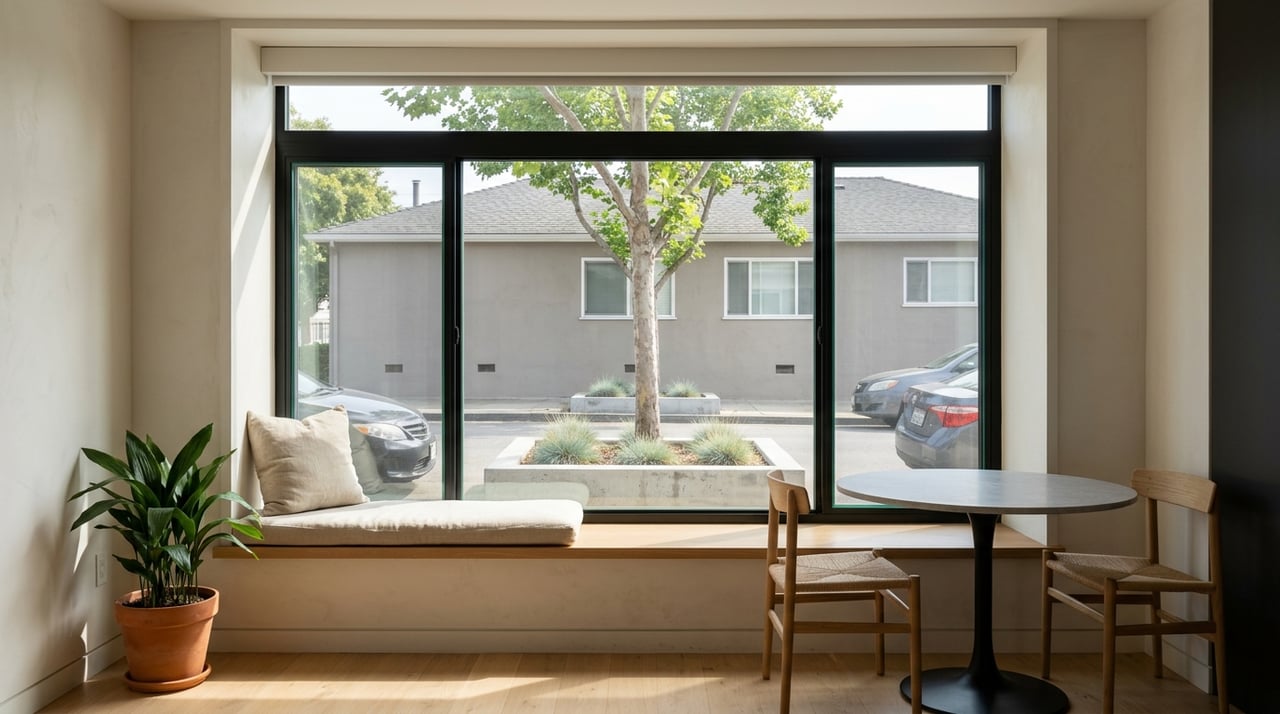
Transit convenience is easy to picture. The harder part is judging how a home will feel once you live there. El Cerrito’s General Plan specifically notes that noise from San Pablo Avenue and the BART tracks should be mitigated with measures like double-paned windows and sound insulation.
That does not mean every nearby home will feel noisy in the same way. Practical details often make the difference, including unit orientation, setback from tracks or parking lots, window quality, and whether your windows face a busy street. In attached housing, shared walls and balcony placement can also affect how private or quiet the home feels.
Connectivity also deserves a close look. The city notes east-west challenges for pedestrians and drivers in the Del Norte area because of the infrastructure corridor created by I-80, San Pablo Avenue, and BART. BART planning documents also show continued focus on balancing walking, rolling, biking, transit, driving, and parking access near these stations.
If you are serious about a home, test the route instead of assuming it works well. Walk from the property to the station at the time of day you would actually commute. Notice hills, crossings, lighting, traffic flow, and how comfortable the route feels.
Parking is part of the buying decision
Buyers often focus on train access and overlook parking until late in the process. Near El Cerrito BART, parking can be part of your everyday quality of life. That is true whether you own one car, two cars, or hope to go mostly car-light.
Start with the property itself. Ask whether the home includes garage parking, deeded parking, assigned parking, or no parking at all. Then compare that with local street conditions and whether resident permit rules affect your block.
This matters even more because the station parking footprint is changing over time. As the Plaza TOD moves forward, former parking lots are being redeveloped into housing and public-serving uses. That can be a positive long-term shift for transit-oriented living, but it also means parking assumptions should be checked carefully rather than guessed.
Pricing near BART requires apples-to-apples comparisons
El Cerrito remains an expensive market, but buyers should be careful with headline price numbers. Bay East reported a May 2026 median sale price of $1.275 million for detached homes in El Cerrito, with average days on market around 15 and average price per square foot of $826. Redfin reported a citywide median sale price of $779,000 for the three months ending May 2026, while Zillow’s average home value was $1.16 million as of May 31, 2026.
Those figures are not interchangeable. Detached-home medians, citywide medians, and average home values measure different things. If you are comparing a condo near the station with a detached home farther away, using one broad number can lead you in the wrong direction.
A better approach is to compare homes by property type, condition, size, location, and walk-to-transit context. That is especially important near BART, where the same ZIP code can include very different living experiences. A data-driven search can help you see whether you are paying for transit convenience, remodeled condition, larger space, or some combination of all three.
Redevelopment can shape long-term value
Many buyers ask whether being near BART helps property value. Research often finds positive value effects near rail, but the size varies by location and housing type. In El Cerrito, the more practical question may be how redevelopment, access, and livability intersect for the specific home you want.
The city’s Housing Element says El Cerrito must plan for 1,391 new units through 2031, including 526 affordable units. That suggests station-area change is likely to continue. For some buyers, that is a plus because it can support more housing choices, updated public spaces, and stronger transit-oriented amenities.
For others, it may raise concerns about nearby construction, changing parking patterns, or a more active streetscape. Neither view is inherently right or wrong. It depends on your timeline, lifestyle, and tolerance for change.
What to review before making an offer
Buying near BART is not just about liking the unit and the commute. It is also about understanding disclosures and property-specific constraints early. In California, the Transfer Disclosure Statement should be provided as soon as practicable and before transfer of title, and agents must disclose material facts affecting value, desirability, and intended use.
That makes your questions especially important in station-adjacent areas. The disclosure package is helpful, but it is not a warranty and it does not replace inspections. If the home is part of a common-interest development, the HOA package also becomes a key part of your review.
Ask direct, practical questions such as:
- How much train, traffic, or parking-lot noise is noticeable inside the home?
- Have the windows or insulation been upgraded?
- Are there parking permits, assigned spaces, guest restrictions, or street-parking limits?
- Are there easements or access issues that affect privacy or use?
- Is nearby construction planned or underway?
- If there is an HOA, what are the dues, reserves, rules, and any restrictions that could affect daily living?
A smart way to evaluate homes near El Cerrito BART
When buyers slow down and evaluate station-area homes with a clear framework, decisions get easier. Instead of asking only, "How close is it to BART?" ask whether the convenience fits your actual life. A five-minute shorter walk may not be worth it if the noise, parking setup, or layout feels wrong for you.
A practical home tour checklist can help:
- Walk to the station from the property
- Visit at more than one time of day
- Stand inside with windows closed and open
- Check where bedrooms face
- Review parking on-site and on the street
- Ask about planned construction nearby
- Compare monthly ownership costs across property types
- Review disclosures and HOA documents carefully when applicable
Buying near El Cerrito BART can be a strong move if you match the home to your commute, budget, and comfort level. The key is looking beyond map proximity and understanding how each block and building actually lives.
If you want help comparing homes near El Cerrito Plaza or El Cerrito del Norte, a local, data-informed strategy can make the decision much clearer. For personalized guidance, reach out to Karthiga Anandan.
FAQs
What should homebuyers compare when buying near El Cerrito BART?
- Compare property type, noise exposure, parking setup, walk route to the station, monthly costs, and any nearby redevelopment or construction activity.
What are the parking options at El Cerrito BART stations?
- El Cerrito Plaza currently shows $3.40 daily parking, $6 daily reserved, and $105 monthly reserved, while El Cerrito del Norte shows $3.40 daily parking, $5 daily reserved, and $93.80 monthly reserved.
What housing types are common near El Cerrito BART?
- Near the station corridors and commercial areas, condos and multifamily housing are more common, while detached homes are generally more common farther into residential blocks.
What noise issues should buyers consider near El Cerrito BART?
- Buyers should pay attention to train and road noise, especially near BART tracks and San Pablo Avenue, and ask about window quality, sound insulation, and bedroom orientation.
What disclosures matter when buying a home near El Cerrito BART?
- Buyers should carefully review the Transfer Disclosure Statement, inspection findings, and, when applicable, HOA documents covering assessments, reserves, rules, and restrictions.
Is the El Cerrito Plaza station area changing?
- Yes. BART said in March 2026 that the first phase of the Plaza transit-oriented development had begun, with plans that include housing, a public plaza, bike parking, a bus zone, and reduced rider parking compared with former surface lots.