If three real estate platforms can't agree on what a typical Northbrae home sold for this spring, what number are you supposed to trust when you're weighing Northbrae against Thousand Oaks or the Berkeley Hills?
Here's what a few minutes of searching turns up. One site's neighborhood page puts Northbrae's median at $1.8 million for the three months ending May 2026, down 25.8% year over year. A different page on that same platform, pulling March 2026 closings, lists the median at $2,150,000, down 11%. A separate listing platform shows $1,725,000 for the trailing twelve months, down 10%. Its own local guide page shows $2,300,000, up 10%. Same neighborhood. Same general window. Four numbers that don't sit anywhere near each other.
That's not a typo somewhere in the data pipeline. It's what happens when a neighborhood this small sells this rarely.
The Math Behind the Moving Target
Northbrae recorded four home sales in May 2026, down from eight in the same month a year earlier. North Berkeley, one street over, saw eighteen sales in that same window. Thousand Oaks, the Berkeley neighborhood near the base of the hills rather than the Southern California city sharing its name, recorded six sales in May 2026, down from thirteen the year before. Berkeley Hills sold thirty-seven homes in April 2026, up from twenty-five.
When a neighborhood closes four to six homes in a month, a single sale with an unusual lot, a heavy renovation, or a bidding war between two motivated buyers can swing the reported median by hundreds of thousands of dollars. That isn't a market shift. It's what a small sample does when you average it.
Compare that to Berkeley overall, which sold 196 homes in May 2026 at a median of $1.5 million with a typical 15 days on market. At that volume, a citywide number tells you something real. At four or six sales, a neighborhood median is closer to a coin flip than a trend line.
What Actually Separates the Three
If the month-to-month medians won't hold still, the underlying price tiers are more consistent, and they explain more about what you're actually buying. Local agents who track these streets closely describe fairly stable bands even as the headline numbers swing: Elmwood running roughly $1.9 to $2.0 million, Claremont above $2.3 million, Thousand Oaks around $1.6 million, and Berkeley Hills view homes spanning $1.8 million to $4 million or more depending on how much of the Bay you can see from the primary suite. Entry-level ownership in West Berkeley starts in the high $700s by comparison, which frames just how much of Berkeley's premium sits in a handful of specific pockets.
Northbrae carries its own premium on top of that. Specialists who work the neighborhood day to day estimate homes there sell 20 to 40 percent above Berkeley's citywide median, a gap wide enough that it can't be explained by square footage alone. What buyers are paying for is a specific set of blocks, not a number on a chart, and those blocks don't change even when the reported median swings 20 points in a quarter.
Three Different Everyday Lives, Not Three Versions of the Same Place
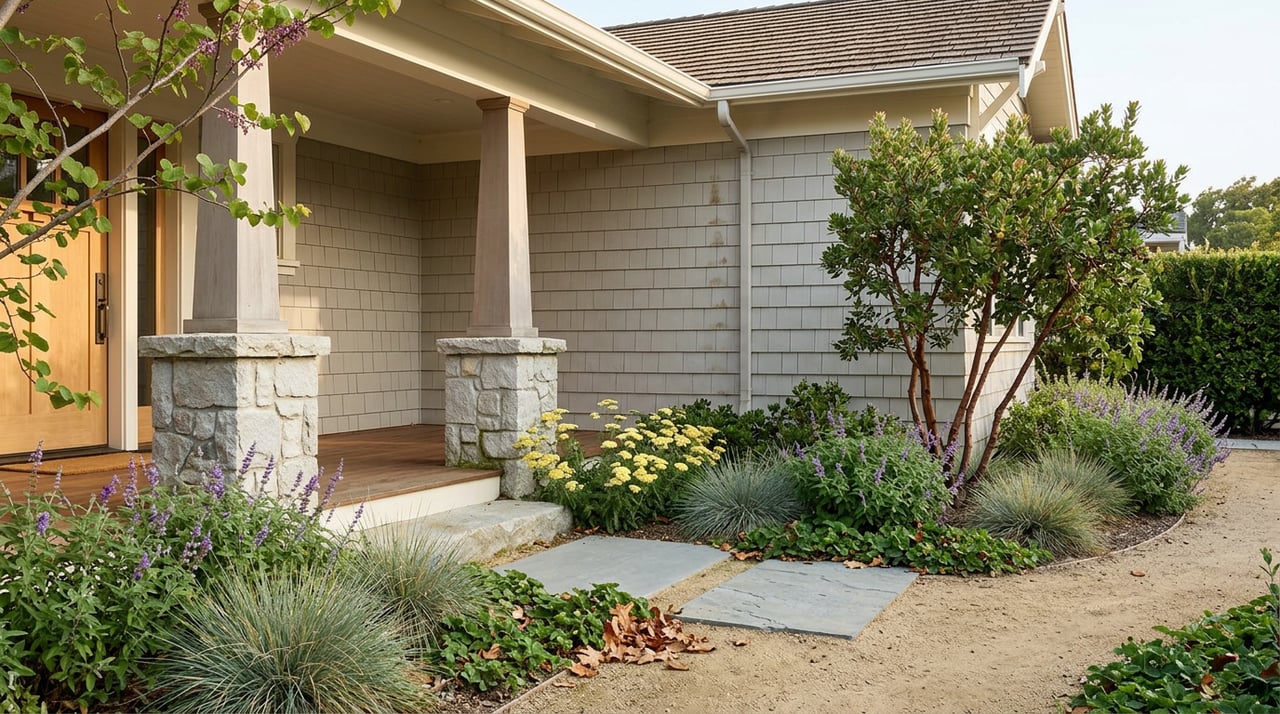
Northbrae centers on the shopping node at Hopkins and Monterey, where Monterey Market, Andronico's Community Markets, and Berkeley Horticultural Nursery anchor daily errands, and Lavender Bakery & Café, Gioia Pizza, and Espresso Roma give the corridor its foot traffic. Solano Avenue runs along the neighborhood's northern edge. The Oaks Theater marks the strip as a landmark. Green space comes from Live Oak Park, with its sports courts and amphitheater, Jewel's Terrace Park, King School Park with its track and pool, and the Berkeley Rose Garden and its roughly 1,500 rose bushes. The housing stock leans toward early twentieth-century bungalows and Craftsmans on moderate to large lots shaded by mature trees.
Thousand Oaks sits quieter. It's built around a residential grid rather than a commercial strip, with Thousand Oaks Elementary as its namesake school and North Berkeley BART within walking distance, putting San Francisco roughly 28 to 30 minutes away by train. Tilden Regional Park's 2,079 acres of East Bay hills recreation are a short drive or bike ride up the hill. The housing stock shares Northbrae's brown-shingle and Craftsman character, just on streets built for slower foot traffic.
Berkeley Hills trades corridor walkability for elevation and outlook. Homes here lean larger, with formal living and dining spaces, terraced gardens, and primary suites oriented toward the view corridor that stretches from downtown Oakland to the Golden Gate. That view is the asset. It's also why the Hills' price range spans so wide, from $1.8 million up past $4 million, depending on how much of it a given lot actually captures.
The School Assumption That Skews the Premium
Here's where a chunk of Northbrae and Thousand Oaks pricing gets built on an assumption that doesn't hold up.
A lot of what buyers pay extra for near Thousand Oaks Elementary assumes proximity equals enrollment. Berkeley Unified doesn't assign that way. Elementary placement runs through three attendance zones, and assignment within each zone happens by lottery rather than by strict address boundary. Thousand Oaks Elementary sits in the district's Northwest Zone alongside Berkeley Arts Magnet, Ruth Acty, and Rosa Parks. A family living inside that zone ranks preferences among all four schools and gets placed through the district's process, with priority given to keeping siblings together at the same site. Living a block from Thousand Oaks Elementary does not guarantee your child attends it.
That changes the math on the neighborhood premium. If part of what a buyer is paying an extra six figures for is proximity to one specific school, that premium is riding on an assumption the district's own enrollment structure doesn't support. The zone is what you're buying. The specific address inside it carries less weight than it would in a district that assigns by strict boundary lines.
How to Actually Compare These Three Right Now
Skip the trailing twelve-month median that three platforms can't agree on and pull closed comps from the last 60 to 90 days instead. Weight lot size and view over anything labeled a neighborhood average. Check which BART station actually shortens your commute: North Berkeley BART serves both Thousand Oaks and Northbrae, while Ashby BART reaches South Berkeley and the Elmwood-adjacent walkers, and Rockridge, just across the Oakland border, catches Elmwood residents closer to College Avenue. And treat the attendance zone, not any single school, as the asset you're actually purchasing.
That last point shows up in the days-on-market numbers too. Berkeley overall moved at a 15-day pace as of July 2026. Northbrae's own three-month window ending May 2026 ran 22 days, roughly a week slower, a natural byproduct of a market thin enough that timing swings the average almost as much as demand does.
A Few Questions Worth Settling Before You Compare Neighborhoods
Does buying inside the Thousand Oaks Elementary boundary guarantee my child attends there? No. Thousand Oaks Elementary is one of four schools in BUSD's Northwest attendance zone, and placement happens through the district's lottery process, with sibling priority factored in rather than straight proximity.
Why do Northbrae and Thousand Oaks show such different price swings month to month? Both sell in small numbers, sometimes four to six homes in a given month, so one unusual sale, a major renovation, a large lot, a bidding war, can swing the reported median by a wide margin without reflecting any broader shift in the market.
Which of the three is closest to BART? North Berkeley BART sits within walking distance of both Thousand Oaks and Northbrae, with a ride into San Francisco that typically runs 28 to 30 minutes. Berkeley Hills addresses generally require a longer walk or a short drive to reach a station.
Comparing these three neighborhoods by median price alone will send you chasing a number that resets every time a new sale closes. The more reliable comparison is the one built from actual comps, actual zone boundaries, and an honest look at what a given block gets you day to day. If you want that comparison run against the current inventory in Northbrae, Thousand Oaks, or the Berkeley Hills, Homes by Karthiga can put together a personalized market strategy built around the streets you're actually considering, not the headline that happened to publish this week.